Author Archives: admin

Hoi Polloi #1

Image033.jpgaxe brand logo.jpg

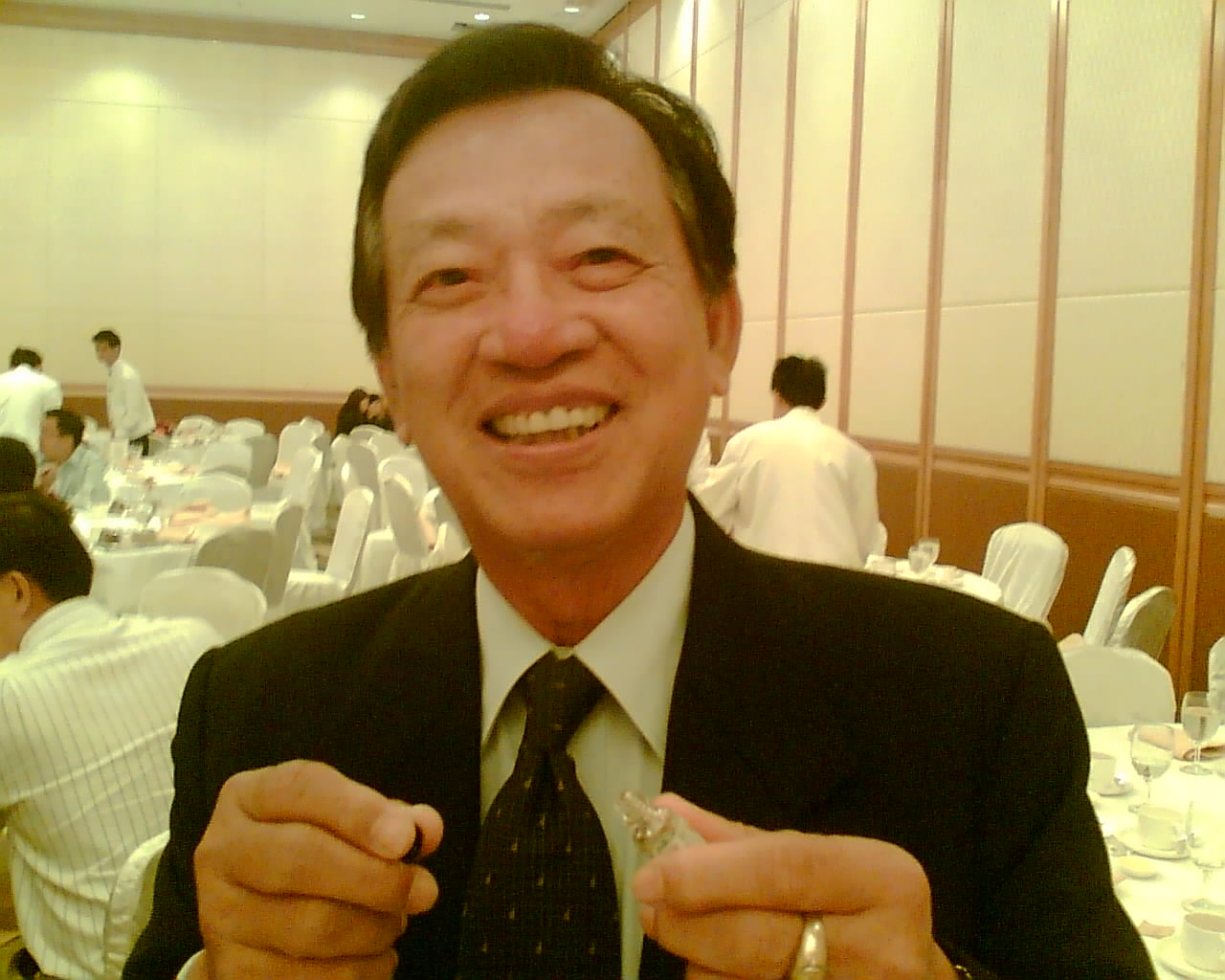
Axe Brand Medicated Oil is as as homey as a pair rubber flip flops. It is something one always has at home and it is used for everything from headaches to muscle pains. It is made by Singapore’s oldest family-run pharmaceutical company founded in 1928. Quite by chance, I sat next to its Managing Director, the son of the founder, Mr Leong Mun Sum. Top 5 questions for Mr Axe Brand Oil.

1 Any new products from Axe Brand?
We are introducing an inhaler, it is going to more powerful than any inhaler you have ever had. We are going to advertise it on buses. We find bus ads most helpful. People say that after they see the bus ads, they feel they have a headache where none existed before.

2 What is the most difficult part of the production process
Squirting the oil into the bottle, the hole is very small, (he whips out his bottle to show me) we have to use special machines to put the oil in, our rate is 100bottles/min.

3 Are you competitors with Tiger Balm?
We are in the medicated oil business, they in the balm business, its very different. We are good friends and respect each other

4 How do you find new markets
We export to more than 50 countries, We are very big in Sri Lanka and just got a distributor in Romania. My nephew is now in Morocco on a trade mission with Sr Minister Goh Chok Tong to find a Moroccan distributor. That is how we got our order from Romania too, through trade missions, very helpful.

5 Are your sons in the business?
No, but my two nephews are, one is looking after the Vietnam factory, one the China Factory. We have five factories in Asia, one is in my father’s home town Shunde, Guangzhou, China

Survivors’ Photo

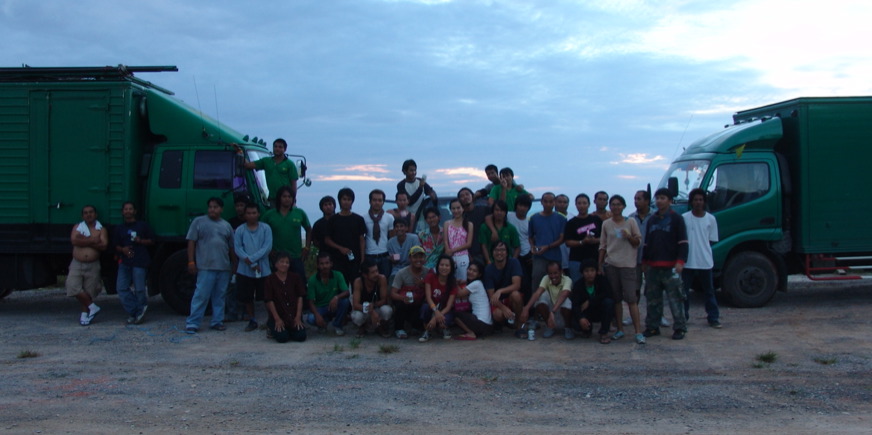
Juke (Aditya Assarat), a Thai filmmaker completed shooting his film. He sent this photo commemorating the end of an arduous journey with a note “We wrapped production on “Wonderful Town” on December 9 @ 5.45pm. Thank you for your guidance and support” I could sense the relief in his voice and the relaxed photo says it all
Picture 2 juke.jpg

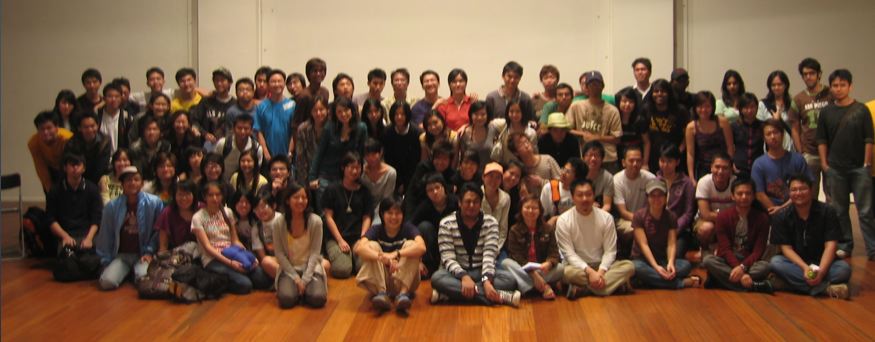
The Fly by Night Video Challenge ended with 45 videos completed in one weekend. Every year, at the end of the event, after prizes are awarded, we always take a survivors’ photo too. Ours looks like this. The look of exhaustion, relief, joy, regret?
Picture 2.jpg

Haolun’s Nostalgia

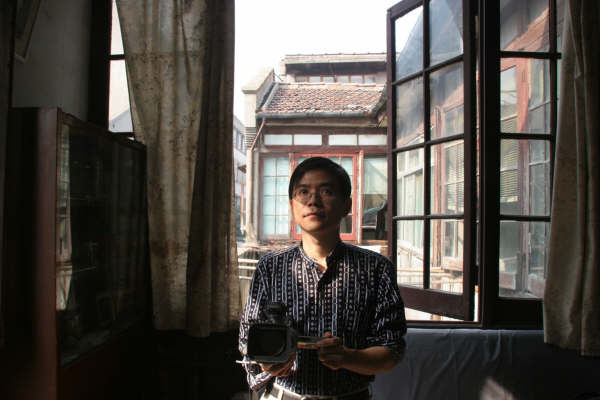
I met Shu Haolun ??? a few years ago with a group of other filmmakers in Jakarta. He showed us his film. It begins with a shot of a group of oldies playing majong in an old house in Shanghai then there is a slow pan to a young man sleeping on the sofa, spectacles askew in deep sleep amidst the din. The shot is held for a long time then the titles come up “An Afternoon at Grandma’s”. That was it. It was literally Haolun’s afternoon at Grandma’s. We burst out laughing. This year, that same house and those on that street are going to be torn down so he made another documentary about that house. The film is called Nostalgia????and it premiered in Shanghai earlier this year. Good luck Haolun! View trailer here
x1pyNp3xQdQ8ySXiFxQPpUJngsaO_qVXwTM1VX6QrZGs16nijbxzrbTQeRB71CwQ88pdx0KDsQAla3SWa8u_p1xgV6ynGCYPUBztMmr4XIWROKC0POVvXldjJX8Pxbt9kvuhHXlbRsGK_0fBoFSIWyhUA.jpg

Days of Being wild

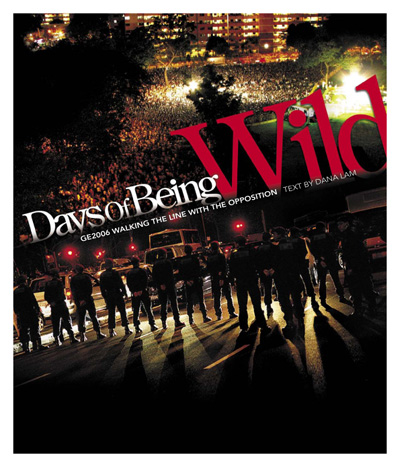
Ha! Not the movie, but a book about a shadow dance of another sort, about the Singapore 2006 General Election by Dana Lam. S$23 at Kinokunya, Select and Books Actually, the holy trinity of indie book publishers. Films can’t be made on this topic but books can be written about it.
daysofbeingwild.jpg
“Over 100 photographs taken by Singaporeans during the 2006 General Election. All-you-want-to-know about Singapore general elections past and present. ”

“a remarkable act of service to our understanding of the struggles of opposition political parties, their political process and their perseverance in and commitment to offering Singaporeans alternative views and choices”
— Ms Constance Singam”

Film skool CONFIDENTIAL

So you realise, a little late in life, after wondering around a bit that you really want to be a movie director, but you have no idea how to get started. With all the buzz surrounding the setting up of the Graduate NYU Film School in Singapore perhaps its opportune to reflect on the notion of film education. Starting from nothing, if one wanted to work in film industry, be a director, is film school the best place to learn about filmmaking and to get into the film industry? Or does it make more sense to apprentice oneself to a filmmaker/editor/producer to learn the chops from them which was how most people learnt about filmmaking in the pre film school days. I was faced this forked path when I realized that I wanted to become a filmmaker in the mid 90’s. At that time, no tertiary film school existed in Singapore (Ngee Ann Polytechnic had just opened, but I felt too old to be making films with 17 year olds). I decided that the best way for me to learn about filmmaking was to throw myself at the feet of Hou Hsiao Hsien hoping that some of his skill would percolate down to me or to apprentice myself to the drama department in Television Corporation of Singapore (TCS, the only TV station in Singapore). The former did not work out so I joined the latter.

Later when I realised that working in television making Triple Nine and Under One Roof did not further my filmmaking dreams did I apply to study for an MFA in film at Northwestern University. Since I learnt the craft under different regimes, I can shed some light on the film education process.

In the best case scenarios, film schools (or education for that matter) allow you to find your voice and they also provide a supportive environment to help you develop it. That was why, although I enjoyed my time making Under One Roof, I had to leave Television. The harsh daily grind of TV-making was killing my voice I had and I had leave to save it. I decided to enroll myself in film school, to not just learn the technical side of things, but to set time aside to help me define, refine my filmmaking voice in a structured environment.

If you are not an autodidact like me then which film school should one go to? Obviously cost is a factor and I will come to that later. The other factor is fit. Different film schools have different emphases. Some are strictly narrative where it is not uncommon for thesis films to cost USD 30,000, be shot in 35mm film. Others are less rigid. The best way to decide which school is for you is to see their students’ graduation films to see if you identify with it. For example, a person like Wong Kar Wai, had he gone to film school would NOT have come out of a film school like NYU, Columbia, UCLA (those schools have a strong focus on script which would have beaten the lets-make-it-up-as-we-go-along inclinations out of him in year 1). He would probably have come from a school like the Art Institute of Chicago which is also the school which Apitchatpong (Blissfully Yours) graduated from. So if you find yourself with a WKW personality, an Art Institute type school would have supported that way of filmmaking.

My references are USA-centred, but one should certainly look to UK, Australia (Unversity of Technology, Sydney has a great films coming out of it), Lodz Film school, Poland, the Beijing Film academy and Hong Kong City Unversity Film School, just to name a few. I myself wanted to go to film school in Japan but I blew the scholarship interview. The other film school I also explored was in Cuba, because I was very impressed by the films of Santiago Alvarez, he who could out of a few stills make the most moving polemical documentaries. At the back of my mind, I was keen on film schools set in cultures I was unfamiliar with, had small or non existent film industries but a thriving underground one. This meant that its filmmakers were more creative in not just getting their films made, but shown as well. They could out of necessity, like Santiago Alvarez say a lot more with a lot less and I wanted to learn from them.
In the end, I decided that Northwestern was best for me, not just because of the scholarship that was offered, but that I fell in love with Chicago. Still, I wonder what kind of films would I be making now if I went to film school in Japan or Cuba.

The other thing is cost. Unlike an MBA from a tier 1 university, which pays for itself 2-3 years after graduation. When you graduate from film school with a Tier 1 MFA, you start at entry level salaries of a fresh graduate or lower. So, if you are going to have to blow a USD 120,000 loan going into a Tier 1 MFA film school in the USA, don’t do it. It will take you many years to pay off the loan and that delays any further plans of auteurship that you may have had in mind, plans that led you to going into film school in the first place.
There are other ways of course, you could find a cheaper film school or win a scholarship. For me, if I didn’t get the Northwestern scholarship, I would have used a fraction of that money to make films and to learn from them. To become a filmmaker, observing others doing it, making one’s own films and watching and reading about films is really the best way. You could do this in a film school (has equipment, crew) or you could do this outside. For every Spike Lee who went to film school, there are others like Amir Mohammed, Martyn See, John Woo and WKW who didn’t. Point is, the benefit has to be balanced with cost, in terms of money and its collary, time.

And so, I ended up in the US, at a school which has a very strong industry focus, but interestingly it also had a very strong experimental niche within its ranks. Added to that, we were surrounded by a world class film history faculty due to our close proximity with the University of Chicago. In searching and refining my filmmaking voice, I was exposed to the best of different kinds of films and non-films so my filmmaking world view expanded exponentially. No longer was film just about what one saw in the cinemas, it grew to encompass installations, new media, theatre and various other expressions of life. I learned how amorphous rules are and how often they are the product of historical and cultural factors that are constantly being re-exammined and changed. I also learned that I could be a force in that change. Through Northwestern, I found myself at ease in the art world, in the film world and also in the TV world. The breadth of my filmmography, award winning documentaries with Discovery Channel, installations (80kmh, 9th August) and also independent documentaries (Singapore GaGa, Invisible City) is a result of this exposure.

A little caveat, film school is not for everyone. If you already have a very strong voice and know exactly what you kind of films you want to make, you may find school’s structured environment oppressive. I had friends who hated the film history or film theory class requirements. They felt that these classes got in their way of filmmaking. If you have a one-track mind, find a one track film school, or just make films and get on with it.

The above post pertains to film school at graduate level where the applicant is alot clearer about what she wants from life. My views on film schools at undergraduate level deserve another post

10 reasons to go
10 reasons not to go

or …if you are looking for short film courses, apart from those conducted by DMA, Objectifs‘, look to the plethora of short film/video courses conducted by Australian Film and TV School . I attended the course by Rob Marchand on directing using Mike Leigh’s Method of improvisation, it is highly recommended. He was able to articulate the craft very well. NFTRS (UK) has a similar short course programme. Singaporeans can apply for MDA’s capability Development scheme for partial funding.
DVD @KINOKUNIYA SOLD OUT!

But fear not, they have replenished the shelves with a fresh batch of Singapore GaGa DVDs. You can also order it online, S$23 only (US$ 15)
Where to get
Kinokuniya Main Store
Takashimaya Shopping Centre
Tel: 6737-5021

Earshot Cafe
The Arts House 1 Old Parliament Lane
Tel: 6332 690

Earshot @ Esplanade
1 Esplanade Drive , #01-01/03
Tel: 6884 5658

Books Actually
125A Telok Ayer St
Tel: 6221 1170

Objectifs
12A Liang Seah St (opp Bugis Junction)
Tel 63393068

Asylum
22 Ang Siang Road

If you want to stock the Singapore GaGa DVD at your shop, restaurant, let us know. Shops Asylum and Books Actually have asked to stock this DVD! Thank you.

Email from Italy 15 Dec

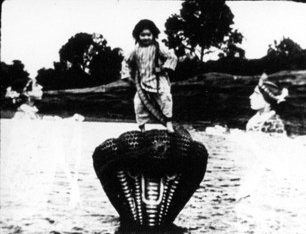
Lorenzo Codelli wrote me an email to tell me “Don’t miss the December 15 only screening, with live Indian music, of the following very rare and beautiful silent Indian classic KALIYA MARDAN (that we did screen years ago at our Pordenone Silent Festival). Tickets will sell out soon”. This is part of the Singapore National Museum Opening festival. Kaliya was made in 1912, my favourite silent film period because the command of the film language was very naive then, directors felt they were uncovering a new syntax, a process often filled with joy and magic. This still says it all.

kaliya.jpg

Look Ma, no hands

S$200,000

Just heard from Colin and Yen Yen that their film Singapore Dreaming grossed S$450,000 (USD 300,000) after a 9 week run in Singapore. Colin mentioned in their blog that this was the highest grossing non-Mediacorp Singapore film. Their qualification refers to the fact that they did not have the marketing nor distribution clout of Mediacorp, the mega media conglomerate in Singapore. However, they did have the backing of another, albeit smaller conglomerate in Golden Village who threw their heft behind this release, opening it in 18 screens with posters, trailers and marquees everywhere. No expense was spared by Golden Village for this Singapore film.

That Singapore Dreaming grossed S$450,000 with their help provides interesting information for me, a producer and director who wants to make work about and for Singaporeans. Of course the gross may be more than $450,000 at the end of the day after you factor in DVD sales, TV sales, overseas sales etc. So let’s say, the gross, after three years is S$500,000.

My conclusion is this, if I wanted to make an independent non-Mediacorp feature film whose primary market is Singapore, one that has mass appeal, something you can bring your whole family to, then, if I want to BREAK EVEN, the film must not cost more than S$200,000 to produce.

How did I arrive at $200,000? Of the $500,000 that they will have grossed, I conjecture that more than half will go to distributor fees, hall hire fees as well as marketing costs eg organising press screenings, conferences, buying ad space, printing posters, striking 18 prints, making DVD/press kits,
So, what can one produce for $200,000? In this day an age when people boast that they can make a feature for $300, $200,000, seems alot of money. But I don’t refer to those kind of films, I refer to the films where the crew/actors are paid a fair wage, that the production actually has insurance for them. It would have to be shot on video (DVCam?) with small lighting kit and skeletal grip equipment. The should will likely be about 3 weeks, shot in Singapore or Malaysia, be a contemporary small scale plot oriented drama about anything as along as its is enjoyable, has mass appeal, something you can bring your whole family to watch. As usual, for this kind of industrial narrative-focused production, script and actors are key. So films along the lines of Sepet, Iranian children’s films would probably be do-able for this budget and have a good chance of opening in 10-18 screens. Or you could make a ghost movie though you can’t have a period drama, special effects, car chases, helicopter shots, no not for $200,000.

If you want to attempt something more edgy or adventurous in terms of structure or content, may be documentaries, I say just gather a group a friends and start shooting. So that even if it doeesn’t get released, or goes straight to video, you don’t lose your trousers and you don’t have to be too burdened about ensuring a return on investment for your backers and more importantly, you had fun while you were doing it

Artist Statements

At the recent Singapore Biennale, I read my fair share of artist statements. These statements are sometimes used as an opportunity to explain the work, at other times to explain the philosophy of the artist which may (or may not) shed light on the work. For me the clarity and accessibility of the statement bears a direct relation to the clarity and accessibility of the work.
Here are some of my favourite artist statements that I have stumbled upon
DV8
Annette Barbier/Drew Browning’s
Krishen Jit Astro Fund for Malaysian Artists

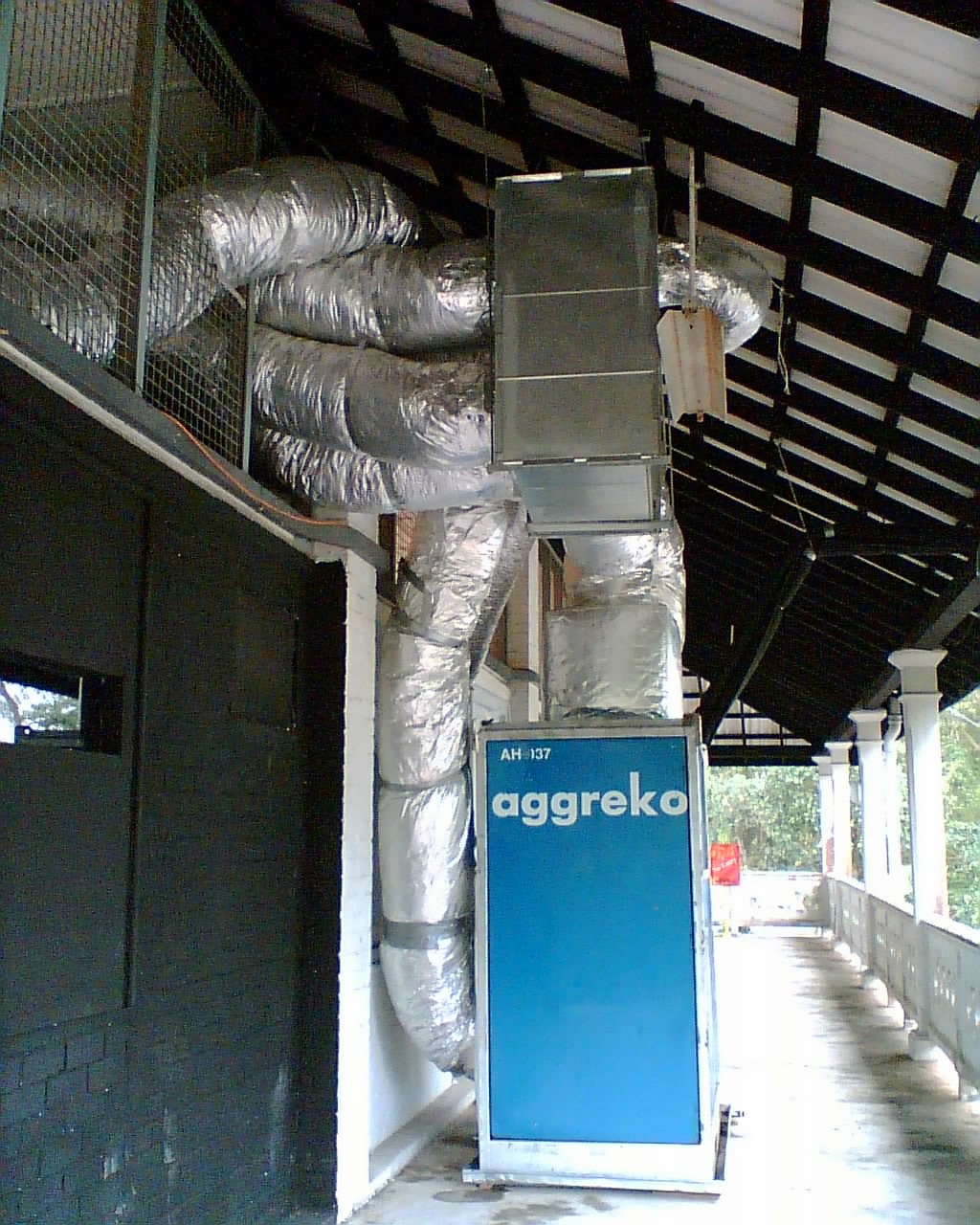
Image005 2.jpg

Its not art, its air Con piping at the Biennale’s Tanglin Camp

The social life of Opium

A film waiting to be made

Asia Research Institute Lecture
The Social Life of Opium in China by Dr Zheng Yangwen
29 November 2006, 7:00pm
National Library, Possibility Room, FREE but register 6516 8787

Recreational smoking was foreign to China, as was opium itself (like tea to England). How and when, then, did opium smoking come to lodge itself within the sophisticated Chinese consumer culture? I trace opium’s transformation over a period of 500 years to show how the Chinese people of different classes and regions redefined a foreign way of leisure and developed a complex culture of consumption around its use. From aphrodisiac to popular culture, from social identity to political economy, Mr. Opium lived a colourful social life and played a role larger than himself in the theatre of modern China.

Breaking News: I *HEART* MALAYA WORLD PREMIERES

My heartiest congratulations to the directors who passed the censors.
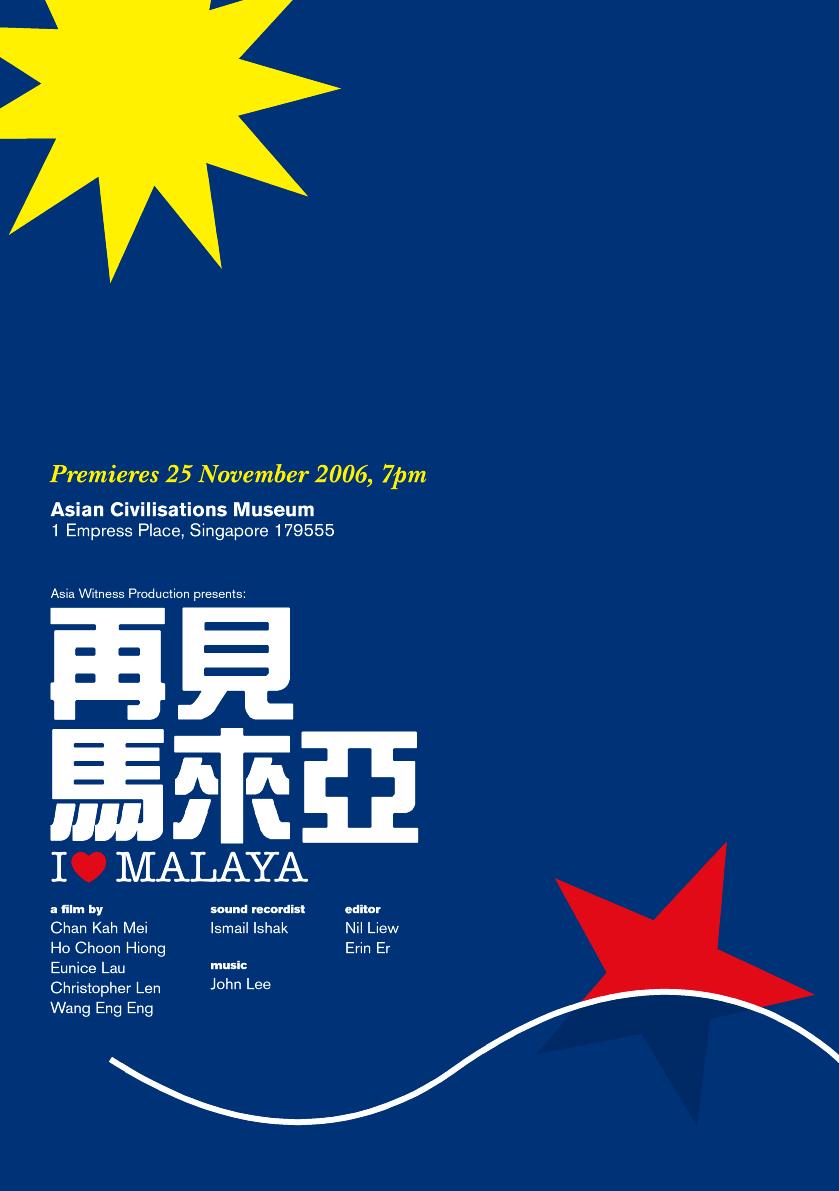
I LOVE MALAYA’ World Premieres
25th Nov, Sat, 7pm
Ngee Ann Auditorium, Asian Civilisations Museum

A documentary film by
Chan Kah Mei, Ho Choon Hiong, Eunice Lau, Christopher Len & Wang Eng Eng

In 2005, an 81-year-old man sued the Malaysian government for denying him entry into the country of his birth. Chin Peng was the leader of the Malayan Communist Party, which waged the longest and most difficult war lasting more than 30 years, first to overthrow the British colonial government and then against the Malaysian state.

When peace was finally secured in 1989, more than 200 former guerillas returned to Malaysia. But Chin Peng was not one of them. In fact there are many like him who have remained in southern Thailand, as stateless aliens, unable to step foot into the country they had given their lives fighting for.

I Love Malaya is the story of their journey home.

unknown.jpg

One unforgettable weekend 24-26 Nov

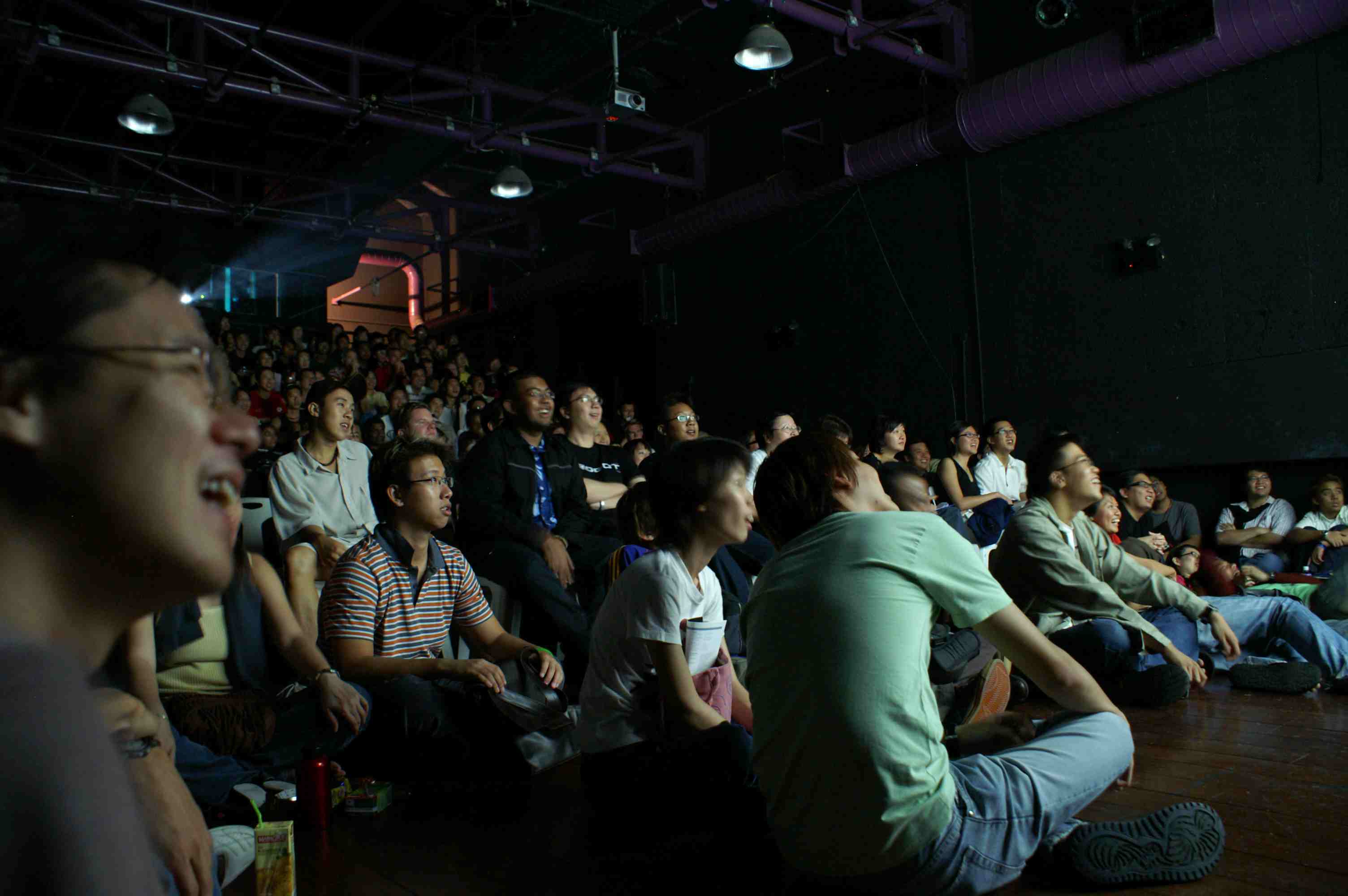
For five hours, they watched in rapt attention. It was the longest screening anyone had ever attended. They watched 45 videos back to back, videos they had produced for themselves that very weekend, videos made by some as young as 15 and as old as 50. Many of them did not get any sleep the night before, still they stayed and they watched, eyes bright with excitement.

yw-fbn2005-03-075.jpg
Sign up for the Fourth Fly By Night Video Challenge. Closing date 23 November.
nutshell review
cinewhore

Photo by Chia Yan Wei

taiwan Documentary Festival detour

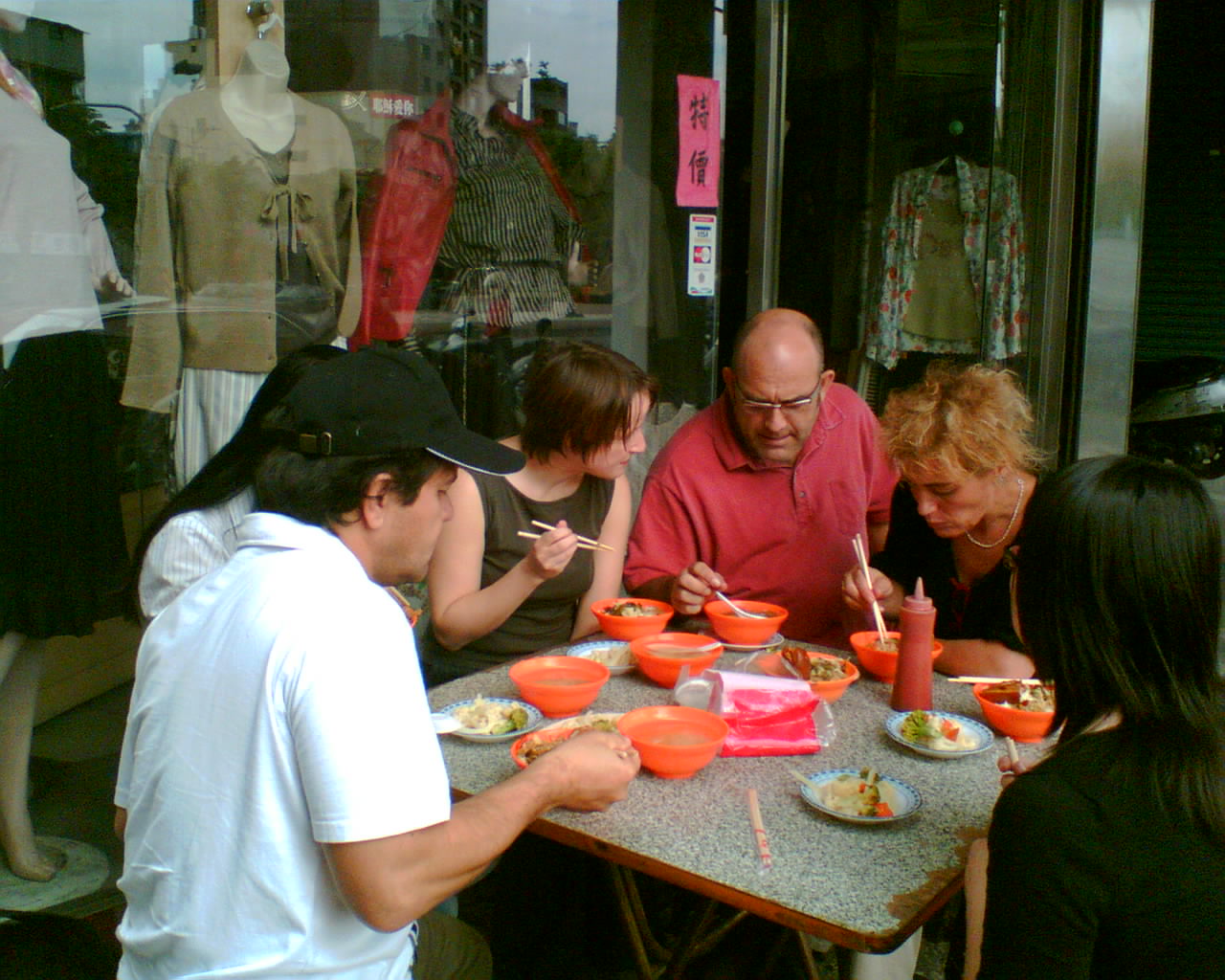
On the way back from the Earthquake Museum in Wufeng, our tour guide took us all five documentary directors from as far a field as Israel & Holland to eat at his favourite roadside pig organ soup stall. Some of us, inspired by his recommendation, tried congealed pig’s blood for the first time. This is, as you can imagine one of the more intimate and personal film festivals I have been to to date. The programme is small, but very well chosen, as are the guests. An interesting factoid, the two top grossing Taiwan films in Taiwan last year (theatrical) were documentaries! One was about the effects of the earthquake on the townsfolk and another about an old farming couple. Taiwan’s equivalient of the media development authority is catching on to the fact that there is a hunger for taiwanese documentaries (not the travel and living kind) and are throwing their full weight behind this documentary festival

Image017.jpg

TAIWAN INTERNATIONAL DOCUMENTARY FESTIVAL

Image007.jpg
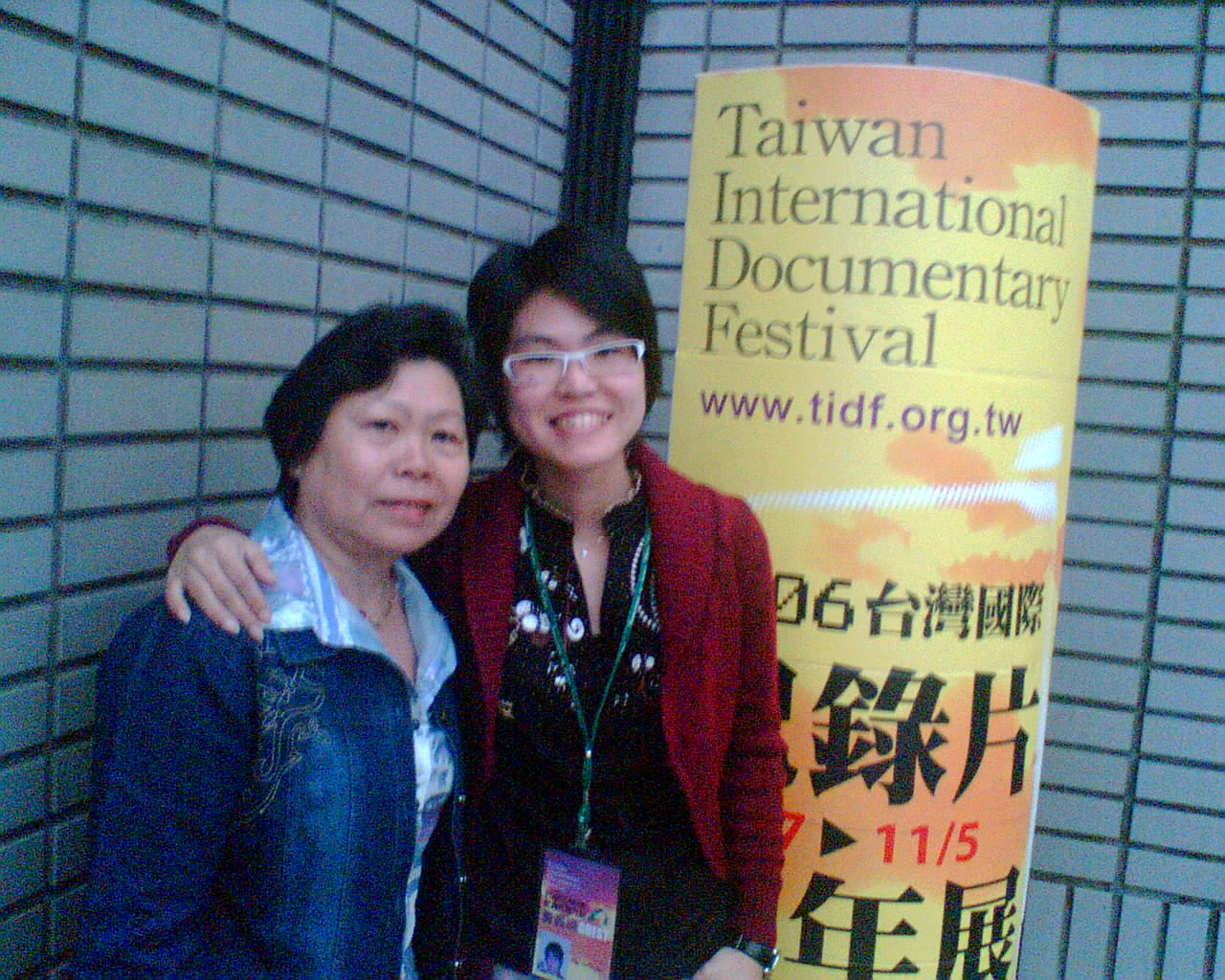
Eng Yee Peng, director of Diminishing Memories invited her mum along to the Taiwan International Documentary Festival in Taichung. Our films were screened in the same programme.
Me: Mrs Eng, why did you decide to come to the festival?
Mrs Eng: I wanted to see what my daughter was up to, she seems to be making mysterious trips abroad, accompanying the documentary.
Me: So what are your impressions?
Mrs Eng: I thought the space would be bigger, more grand, a big hall with a red carpet
Me: The hall in Taichung is actually very big, most halls I have been to are smaller. Are you impressed with the questions?
Mrs Eng: The questions are quite banal actually

australian cinema canon

Where else but at the Substation Moving Images Programme

Mon 20 Nov, 2-5pm: Picnic at Hanging Rock (1975) by Peter Weir
Tue 21 Nov, 2-5pm: Sunday Too Far Away (1975) by Ken Hannam
Wed 22 Nov, 2-5pm: The Getting of Wisdom (1978) by Bruce Beresford
Thu 23 Nov, 2-5pm: Newsfront (1978) by Philip Noyce
Fri 24 Nov, 2-5pm: My Brilliant Career (1979) by Gillian Armstrong
Sat 25 Nov, 3-4.30pm: Film as Culture vs Film as Industry A Conversation on National Cinemas with Dr Vincent OąDonnell and Dr Kenneth Paul Tan from the National University of Singapore (Free Admission).

Tickets from www.gatecrash.com.sg, hotline 6222 5595, or
The Substation Box Office, hotline 6337 7800 (noon to 8.30pm, Mon to Fri)

Pity documentaries aren’t included in this cinematic survey. I am beginning to come to terms with and even relish documentaries’ position as illegitimate children in most countries’ film lists. Be that as it is, it was great to attend the the Taiwan International Documentary Festival held in Taichung. For a few days, I felt like our work was the centre of the world, not an afterthought.